A commercial ice machine may stop making ice because of its operating settings, restricted water flow, a clogged filter, poor condenser cooling, mineral buildup, a full-bin signal, or an internal fault. The symptom does not identify a failed part by itself.
For a restaurant, bar, or café, the first step is to distinguish no ice production from reduced output or ice that is made but not dispensed. Record what the equipment is doing before resetting anything.
This guide covers commercial cube, nugget, and flake equipment, not refrigerator ice-maker modules. Procedures depend on the brand, exact model, condenser arrangement, and ice-making design. Staff checks should stay within normal operator tasks.
Why Is a Commercial Ice Machine Not Making Ice?
Start with the machine’s controls, water supply, filter-service history, ventilation, and actual bin level. A full-bin shutdown or scheduled pause may be normal. A machine that runs without freezing, or repeatedly fails to release ice, needs a different investigation.
An empty bin alone does not prove that production has stopped: usage may exceed output. On dispenser equipment, ice already in storage but not reaching the cup can indicate a separate dispensing problem.
1. Check the Machine’s Operating Status
Observe the normal display and controls. Note whether the unit is off, making ice, cleaning, delayed, or reporting a fault. Manitowoc NEO controls, for example, distinguish delay, cleaning, full-bin, and service conditions; not every status light indicates a breakdown.
Record the exact code or flashing sequence before any restart. Codes differ between manufacturers and model families. Do not apply a reset sequence from another machine.
Confirm whether staff intentionally stopped the machine or recently cleaned it. Do not interrupt an active chemical-cleaning procedure to resume production. Some models also have normal startup or flush delays; rapid power cycling can restart the waiting period.
If a breaker trips repeatedly, or there are sparks, burning smells, or wet electrical connections, keep staff clear and follow the site’s safety procedure rather than repeatedly resetting power.
2. Inspect the Water Supply
Commercial ice machines need a reliable potable-water supply. An interrupted supply, restricted line, or inlet-system problem may prevent filling or reduce production.
Safe checks: confirm that the designated supply valve is open if safely accessible; look for obvious kinks, damage, or leaks in exposed lines; and note whether the problem began after plumbing work, cleaning, or a water interruption.
Water at a nearby sink does not establish that enough water reaches the machine. The equipment’s required flow and pressure depend on its model and installation.
Do not disconnect pressurized lines, dismantle inlet valves, or adjust water-regulating components. If the visible supply looks normal but the machine does not fill, arrange inspection of the inlet system, water-level controls, and related components.
3. Check the Water Filter
A restricted cartridge can reduce incoming water flow. Depending on the machine, this may cause slow production, incomplete batches, or failure to fill.
Check the filter’s replacement record and any available status indicator. An overdue date is a maintenance concern, not proof that the filter caused the shutdown. Note whether the problem started immediately after cartridge replacement.
Use the cartridge and procedure approved for the installed filtration system. Follow its pressure-isolation and flushing instructions; arrange service if the procedure is unclear.
If correct filter service does not restore production, investigate further rather than repeatedly replacing cartridges. Water filtration and cleaning the machine’s existing mineral deposits are separate maintenance tasks.
4. Look for Restricted Condenser Airflow
On an air-cooled machine, dust, grease, blocked intake filters, nearby boxes, inadequate clearance, or excessive surrounding heat can interfere with heat removal. A fan fault can produce similar symptoms.
Remove storage blocking accessible vents and compare clearances with the equipment manual. Clean only operator-serviceable filters or surfaces, using the specified shutdown and power-isolation procedure. Do not reach into moving parts, spray electrical equipment, or open concealed compartments.
Not every machine cools its condenser the same way. Water-cooled equipment uses a condenser-water circuit; remote-cooled equipment rejects heat at a separate condenser. A clear grille at the ice-making head does not rule out a problem elsewhere. Scotsman’s Prodigy Plus manual distinguishes these arrangements.
Do not change cooling-water settings or climb to a remote condenser for this check. Tell the technician what type of system is installed, if known.
5. Consider Mineral Scale and Water-System Buildup
Mineral deposits can interfere with water distribution, sensors, ice formation, or release. Visible deposits, irregular ice, and declining output are useful clues, but they do not prove that scale is the only problem.
Use the cleaning, descaling, and sanitizing procedures for the exact model. Chemical compatibility, dilution, contact time, disassembly, and rinsing requirements vary.
Remove stored ice as the procedure requires and never serve ice exposed to cleaning chemicals. Do not scrape the evaporator, mix cleaners, or substitute an unapproved product. Hoshizaki’s KM guidance specifically calls for removing ice from the bin before cleaning to prevent contamination.
Heavy buildup, recurring faults, or maintenance beyond the operator procedure requires service. For the related topic, read How Mineral Scale Affects Commercial Ice Machines.
6. Check Whether the Ice Bin Is Reporting Full
Stopping when storage is full is normal. The problem is a full-bin indication that does not match the actual ice level, or a machine that does not resume according to its normal sequence after ice is used.
Bin controls vary. Some use an optical sensor; other designs use different sensing or switching arrangements. Scotsman identifies mineral deposits on optical sensors as one possible cause of a false-full condition on specified UF/UN models. This is an example, not a diagnosis for every machine.
Check the visible ice level and accessible obstructions without removing guards. Follow the operator instructions when removing ice, and keep hands and tools away from moving parts and sensing mechanisms.
Do not bypass, tape, hold, or reposition a switch to force production. Persistent false-full indications need model-specific inspection.
7. Determine Whether Ice Is Forming but Not Being Released
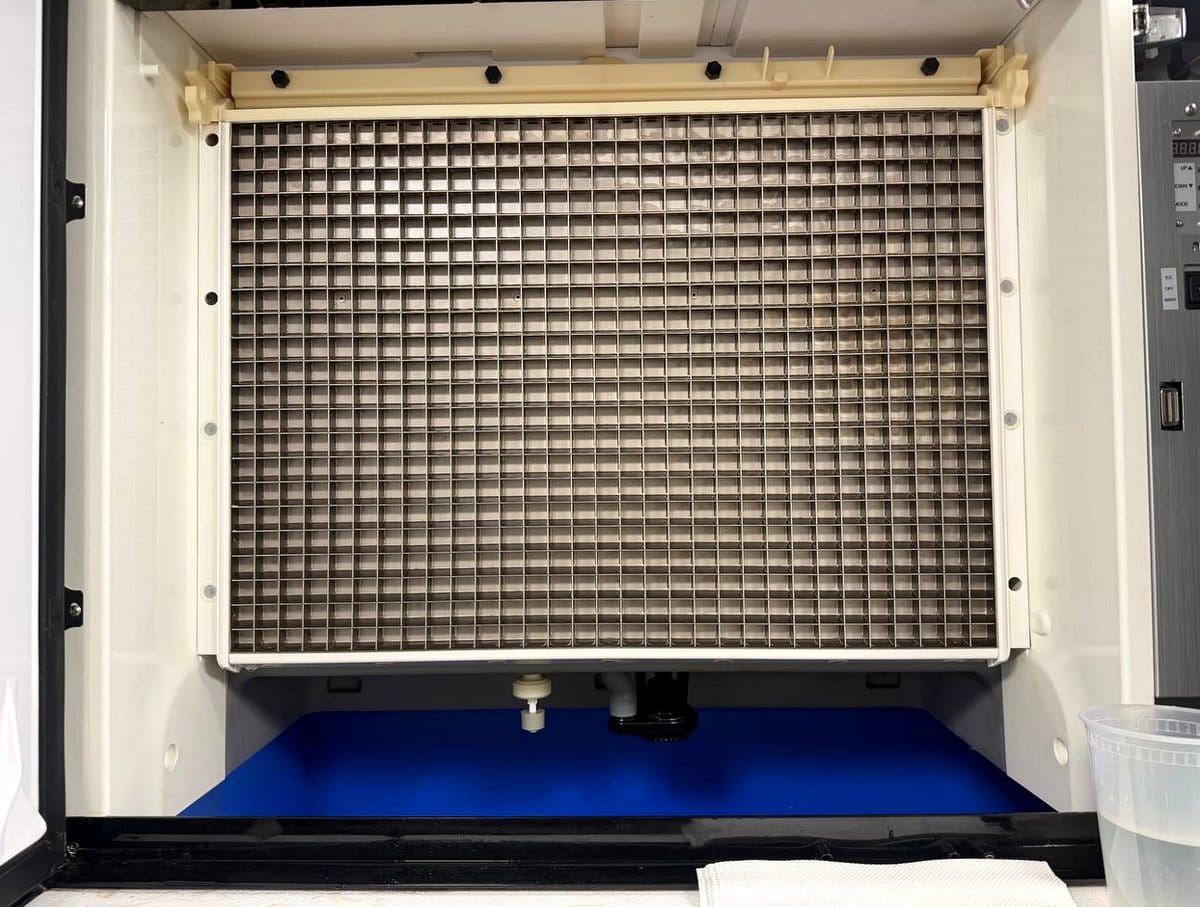
On batch cube machines, freezing ice and releasing it into the bin are different stages. Ice repeatedly remaining on the evaporator may point to a harvest problem involving water distribution, sensors, controls, or refrigeration components.
Nugget and flake equipment may work differently. Many auger-type machines produce ice continuously through a freezing cylinder rather than dropping a completed slab after a separate harvest cycle. Scotsman describes this continuous-flow process in its flake and nugget service documentation.
Also separate production from dispensing: ice in a storage bin that does not come out of the dispenser is not automatically a freezing failure.
Observe only through normal viewing areas. Photograph a visible fault and record whether ice forms, remains stuck, or fails to dispense. Do not pry ice free, force a harvest, or reach into a chute or auger.
8. When the Problem May Involve Refrigeration or Internal Components
If the controls, visible water supply, filter status, ventilation, and bin condition do not explain the problem, further testing may be needed.
Possible faults involve a water pump, fan, inlet valve, sensor, control board, auger drive, or refrigeration component, depending on the design. Humming or an empty bin does not justify ordering a pump or compressor.
A qualified technician can review fault history and test the relevant systems to distinguish an operating problem, maintenance need, and failed component. Leave live electrical testing, refrigerant handling, internal repairs, and safety-control diagnosis to qualified personnel.
Quick Troubleshooting Table
| Symptom | Possible explanation | Useful next step |
|---|---|---|
| Machine appears off | Power loss, an off/delay setting, or a control fault | Check normal controls; record status and any visible fault. |
| Machine runs but does not fill | Water restriction or inlet/level-control problem | Inspect accessible valve and lines; report recent plumbing work. |
| Production has gradually slowed | Water flow, scale, condenser cooling, demand, or an internal fault | Compare with normal output and operating conditions. |
| Bin-full indication | Actually full storage or a sensing problem | Check visible ice level; do not bypass a sensor. |
| Ice forms but does not drop | On a cube machine, a possible harvest fault | Record the model and behavior; arrange service. |
| Production stops repeatedly | Recurring fault or a normal operating pause | Record status, timing, and error before any approved reset. |
| Water leaks around the unit | Supply, drain, or internal water-system problem | Keep people clear of electrical hazards and request inspection. |
These are starting points, not definitive diagnoses. The model’s troubleshooting guide takes priority.
What Should Restaurant Staff Do When Ice Production Stops?
- Record the symptoms: note when output changed, the operating status, noises, and any error. Photograph the display before resetting.
- Check accessible conditions: review the water supply, filter record, ventilation, and bin level without dismantling equipment.
- Protect service and sanitation: follow the establishment’s procedure for obtaining food-grade replacement ice and keeping it protected: do not put fresh ice into a contaminated bin.
- Avoid improvised repairs: do not bypass controls, open electrical enclosures, or use unapproved chemicals.
- Arrange service: provide the brand, model, serial number if accessible, symptoms, fault photos, and recent maintenance history: mention access restrictions for an undercounter installation or remote condenser.
For NYC establishments, Health Code §81.07(g)–(h) requires utensils or automatic dispensing for ice intended for consumption and specifies storage practices that protect utensil handles from contact with food. Keep the scoop and storage area sanitary while replacement ice is used.
Visible contamination or slime requires attention independently of whether the machine makes ice. Keep suspect ice out of service. Significant leaks, electrical damage, or severe mechanical noise require stopping use and following the site’s safety procedure; do not handle wet electrical equipment.
How to Prevent Commercial Ice Machine Problems
Base the maintenance program on the exact machine, water conditions, use, and operating environment. Keep records of cleaning, sanitizing, descaling, filter replacement, faults, and repairs.
Keep accessible ventilation clear, inspect visible water and drain connections for leaks, and report changes in output or ice quality. Follow the manufacturer’s schedule rather than assuming that one monthly, six-month, or annual interval applies to every task.
Cleaning, descaling, and sanitizing have different purposes. Completing one does not necessarily complete the others. Filters and automatic flush features do not eliminate the need for the model’s prescribed maintenance.
When checking capacity, compare equivalent conditions. Published daily production depends on test air and water temperatures, and bin storage capacity is not daily production capacity. Scotsman lists these separately in its UN0815 specifications.
Frequently Asked Questions
Why is my commercial ice machine running but not making ice?
Possible causes include restricted water flow, poor condenser cooling, scale, a false-full signal, or an internal fault. First check what “running” means: cleaning, a delay, freezing, and dispensing are different states. Record the model and any warning.
Can a clogged water filter stop an ice machine from producing ice?
Yes. Restricted flow can prevent proper filling or reduce output. Check the cartridge’s service record and follow the correct replacement procedure. A new filter is not a guaranteed cure when the fault is elsewhere.
Why does my ice machine make ice slowly?
Water restrictions, scale, condenser conditions, high air or water temperature, and internal faults can reduce output. Increased demand can also leave the bin low. Compare performance under similar conditions rather than expecting the maximum advertised rating at all times.
Why does my commercial ice machine make ice but not drop it?
On a batch cube machine, the harvest stage may be failing. Nugget and flake machines can use a different process. If ice is already in the bin but does not dispense, report that separately. Do not pry ice off the evaporator or reach into the chute.
Should I reset a commercial ice machine?
Only when the exact model’s instructions permit it for the observed condition. Record the fault first and allow any specified restart delay. A returning error needs diagnosis, not repeated power cycling. Do not reset a repeatedly tripping breaker to keep production running.
How often should a commercial ice machine be cleaned?
Use the manufacturer’s schedule for the exact model and task, adjusted for the operating and water conditions it describes. Internal descaling, sanitizing, bin cleaning, and air-filter maintenance do not necessarily share one interval.
When should I call for commercial ice machine repair?
Request service when safe checks do not restore normal production, faults recur, ice does not release properly, or leaks persist. Severe noise, electrical hazards, and internal refrigeration or control problems should not be treated as routine staff maintenance.
Can a commercial ice machine problem affect sanitation?
Yes, but loss of production does not itself prove that the ice is contaminated. Visible slime, contamination, unusual odors, or contact with cleaning chemicals requires corrective action. Do not serve suspect ice or return the machine to use before the necessary cleaning and sanitizing are complete.
Commercial Ice Machine Repair in NYC
Screws Appliance Repair provides commercial ice machine diagnostics and repair for New York City restaurants, bars, cafés, hotels, and other businesses. We service modular and undercounter machines, cube, nugget, and flake systems, and dispenser equipment.
If your machine is not making ice, repeatedly stops, or cannot release or dispense ice normally, request commercial ice machine repair in NYC. Include the model, symptoms, fault code, and relevant photos so the service team can prepare for equipment-specific diagnosis.